
HFD Says: Wear Your PFD
Henrico Fire reminds everyone that the best rescue is the one you never need.
In this hot weather, a lot of us stay cool by going for a swim, an easy paddle, or a boat ride on the James. A relaxing day on the water. But with water there is ever-present risk involved. Chances are it won’t happen to you, but a slip and fall from the dock, fatigue, a severe leg cramp, or a submerged rock or log can quickly turn things into an emergency. The river can look calm on the surface while hiding serious hazards below. That’s why Assistant Chief of Special Operations Mark Cumashot with Henrico Fire says that water safety is about risk management and one piece of equipment makes the biggest difference:
Bring your PFD. Check your PFD. Wear your PFD.
The first step is actually choosing the right PFD or personal flotation device. There are so many options all with their pros and cons. I got the chance ride along with him and two to other firefighters to get first-hand experience, and I can tell you, not all PFDs are the same!
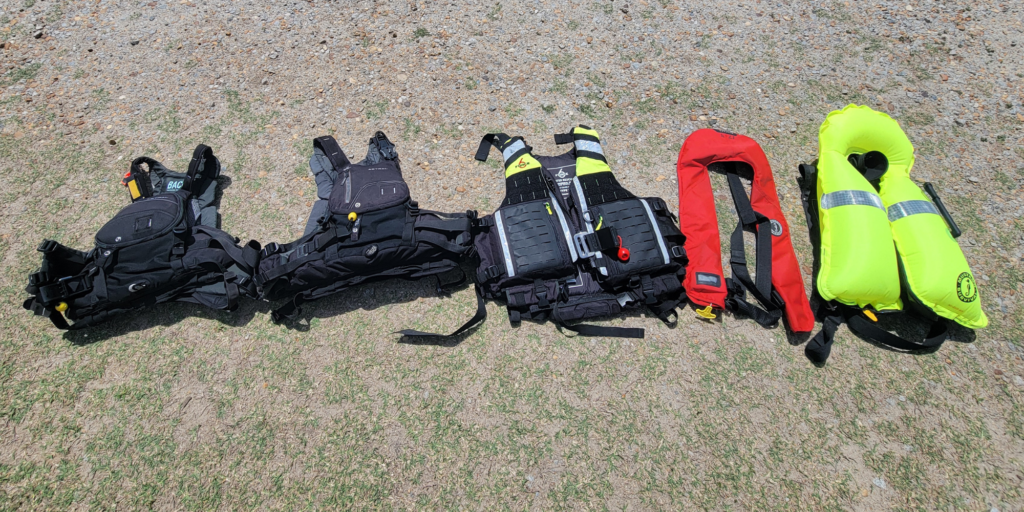
Before jumping in the water, Mark reviewed the different PFDs that I would be trying out including two Astral Indus Type V vest with 22 lbs. of flotation and 16 lbs, of flotation, a jacket style Type V vest with 26 lbs. of flotation, and the Mustang inflatable Type II PFD. The roman numerals associated with the jackets are part of the Coast Guard’s classification system. Henrico’s water rescue teams typically wear Type V, which is a broad category of special use devices meant for athletes, whitewater, water rescues, and law enforcement. This was also my preferred vest as it had 8 points to tighten and felt the most secure while giving me room to move my arms and function. 16 lbs. was enough to keep me afloat and the 22 lbs. had me sitting even higher in the water. The jacket-style Type V is not typically used by the general public but has a similar fit and shape as the typical Type III jackets that are used for general boating and calm waters where a quick rescue is probable. Mark wanted to be sure to point these out because Type III PFDs will keep you afloat but face down if you are unable to roll yourself over. On the plus side, it is the most inclusive type when it comes to sizing and adjustability. I can confirm that this put you in the water face first but didn’t take much to roll over. I felt more like a turtle with limited range of motion, but would have been visible to any rescuers. The inflatable vest was a Type-II or near-shore buoyant vests and by far my least favorite. I appreciated that it was less bulky than the others while on the boat, but once it inflated, I had to work to remain calm since it truly focuses its support on your neck and head. Type I or off-shore life jackets are best for all waters and is your typical abandon-ship lifejacket for commercial vessels.
When choosing the right PDF, you not only want to make sure it is a type suitable for the activity you are doing but provides enough buoyancy, aka keeps you sitting high enough in the water.16 lbs. or 22 lbs. may not sound like a lot, but if the vest is sitting at your chest, like it is supposed to, you are really just focused on being buoyant enough to keep your head above water. Your weight, body fat, lung size, clothing, and whether the water is rough or calm, all play a part and you may be surprised how few buoyancy pounds you actually need.
Clothing will also play a role in how well the vests fit. Before I jumped in the water, I made sure to tighten the 8 points on the Type V vest but once in the water, you can really tell what can be tightened a bit more. If you can pull the vest up past your ears, it is definitely not tight enough! It’s also a good reminder that even if you tighten it once then take it off to swim or something, you are most likely going to need to tighten it all over again. Conveniently, life jackets come in a range of sizes like small-medium, medium-large, and large-extra-large. Choosing the correct size will help you not have to tighten as much too. Finally, it is good practice to check that your PFD fits before you need it. Ensure that it fits well, but also to make sure it is not damaged and is Coast Guard approved.
Most importantly wear your flotation device when you are out on the water. It can’t help you if it is not on you. If you are worried about tan lines or style, choose a different kind of PFD. There are plenty of options!